
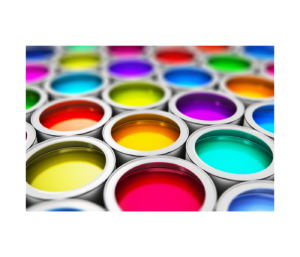
Plastisol inks are PVC (Polyvinyl Chloride) based systems with no solvents in their composition. Plastisol is widely used in the textile industry for screen printing. CLTI PLASTISOL Inks is indeed very important to its Textile Customers. CLTI PLASTISOL inks, unlike other inks, are cured in prior to drying. Plastisol inks, rather than being absorbed with the fibres, tend to be put on top of the fabric, displaying a plasticized texture. It is also used to print HD (High Density) imagery.
Features of CLTI Plastisol Inks
- It is simple to print.
- Doesn’t dry out in the screen.
- Will be opaque on dark clothing.
- Demonstrates the sticky property of the product.
- It may be printed on T-shirts, Athletic Jerseys, Hoodies, and Heat Transfers, among other things.
- It has a higher colour vibrancy.
- It has improved colour accuracy.
- Extremely long-lasting.
- It is more adaptable.
Chemistry behind CLTI Plastisol Inks
Plastisol inks could well be printed on a wide range of materials that can resist the heat necessary to cure the ink and seem to be porous enough to allow for excellent ink adherence. Unlike traditional dye materials, they do not colour the threads of a cloth. Ink from plastisol screen printing wraps around the fibres and forms a mechanical connection with the cloth. Plastisols for screen printing will not bind to non-porous surfaces such as plastic, metal, wood, and glass. Before printing, a bonding agent or catalyst must be applied to create a water-proof nylon material.
Keywords
Plastisol Inks | Textile Printing Inks | Screen Printing | Garment Printing | T-shirt Printing | Heat Transfers | Fabric | PVC Inks